

15,303 total views, 6 views today
The upcoming NDAA legislation is hopefully about to be passed by the Senate and then signed into law by POTUS himself. Should it be passed, as is, then we will see a rebranding of Unidentified Aerial Phenomena into Unidentified Anomalous Phenomena (UAP).
It was quite strange to see the Congress adopt ‘Anomalous’ into the official definition. Firstly, because it subtlety signals the real Congressional intent which goes beyond considering these unknowns as simple ‘Chinese drones’ and ‘Air-Trash’ (balloons, etc). Congress have long indicated they want to sidestep ‘man-made objects’ in favour of something more unidentifiable or anomalous.
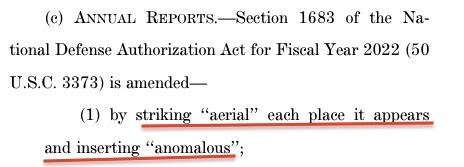
Congressional proposed legislation requesting Aerial be replaced by Anomalous.

The dictionary definition of ‘anomalous’.
Secondly, it was strange for me personally to see. This was because for the past two years writing under UAPMediaUK and for The Unidentified, I have been advocating through activism efforts that Congress actually adopts the phrase ‘Unidentified Anomalous Phenomena’ as the official term for UAP. Additionally, I have documented the advantage of using anomalous as part of an ongoing UAP book series entitled ‘Unidentified Anomalous Phenomena’, which both covered the UAP initiative, the Congressional effort and advocated the widespread use of ‘anomalous’.
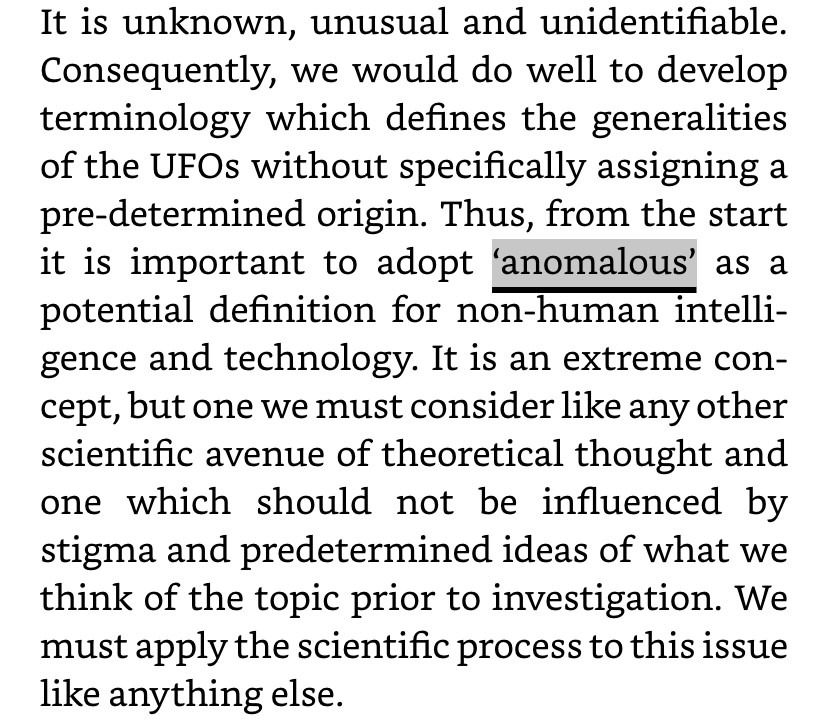
Paragraph from the book Unidentified Anomalous Phenomena – Adam Goldsack.
Why is Anomalous significant?
The October article which appeared on The New York Times had featured ‘anonymous sources’ from within the Department of Defense (DoD). To some the agenda was clear. These were agents who were more than happy to provide false information and to see it sneak into the mainstream as accepted fact. Many in the UAP research community were calling this a orchestrated disinformation effort, particularly with regards to inaccurate information given around the infamous Go-Fast and Gimbal cases, both of which are still classed as ‘Unidentified’ by DoD. Considering the polar opposite data presented to the Daily Mail by other ‘anonymous sources’ from within DoD, it was evident that something was going on.
The claims from researchers came in strongly – that a very effective agenda was in place to allegedly associate the entire mystery as ‘Air-Trash’, and to kill the (yet to be released) UAP report, days before the public saw it. The usage of ‘Air-Trash’ terminology was paramount.
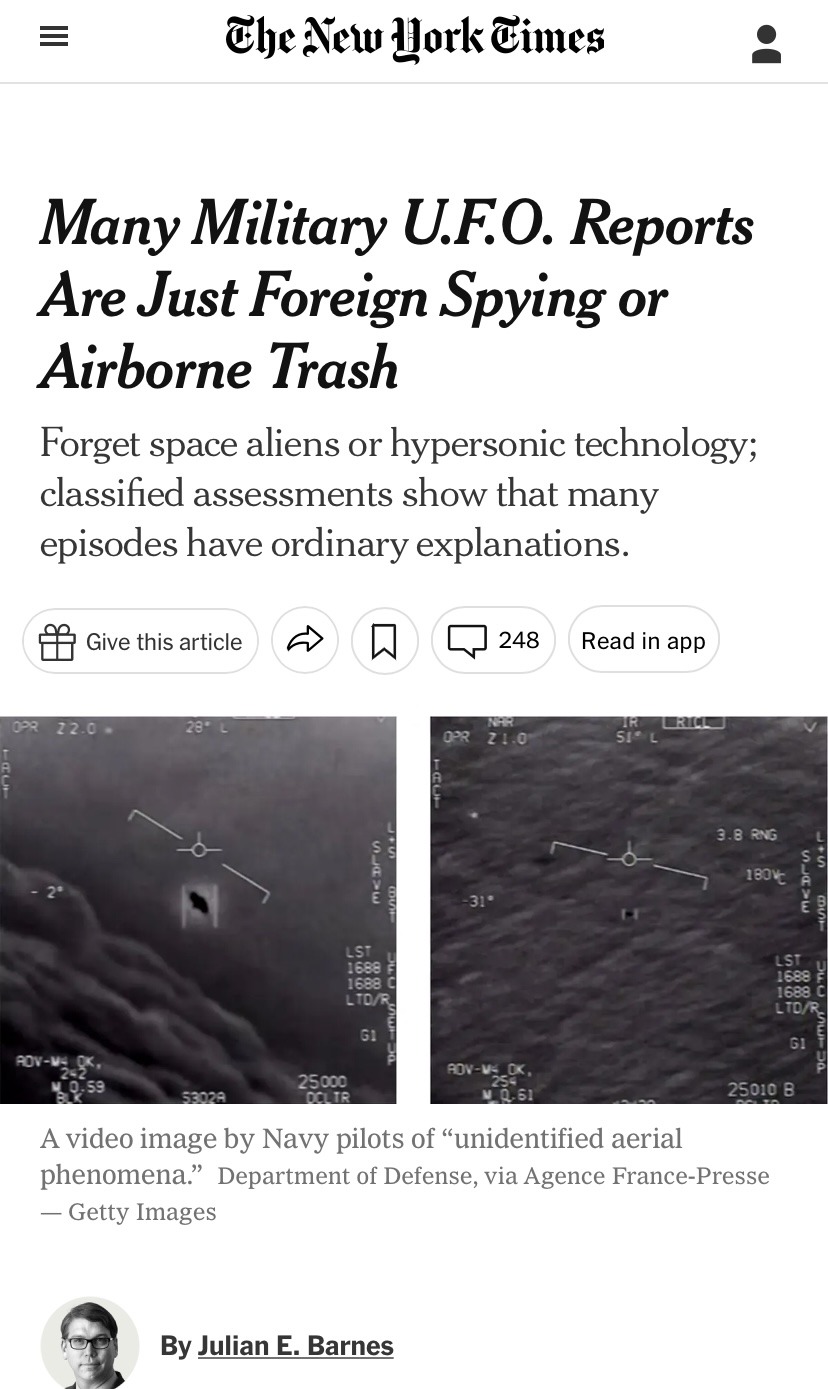
Title from the heavily criticised New York Times article.
The significance of this all was the use of psychology through words and context. When for consider such words as ‘Aerial’, we automatically think all things airborne, mundane, and very much explainable (particularly with more available data). Using ‘Aerial’ in the title concept of ‘UAP’ very much conjures up the visualisation of planes, drones, balloons and all terrestrial things that are in-between. Subconsciously, one doesn’t think something is unidentifiable with ‘Aerial’, ‘Airborne’ or ‘Aviation’. Additionally, and probably most importantly, we certainly don’t consider Transmedium vehicles that transverse from space-atmosphere-water with such mundane terminology.
And this is the key.
Anomalous means something else – a transmedium vehicle that isn’t immediately identifiable that can transverse through all mediums seamlessly – a radical technology we do not knowingly possess.
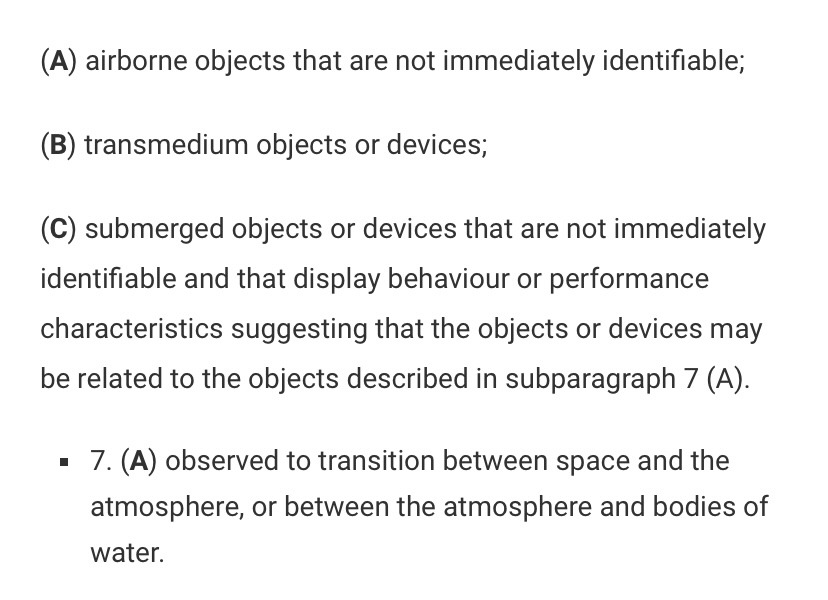
The Congressional definition of Unidentified Anomalous Phenomena.
Arguably, it was this very use of effective psychological approach that led the United States AirForce (USAF) to change the very definitive ‘Flying Saucers’ to ‘Unidentified Flying Objects’ (UFOs) back in the early 1950s through Captain Ruppelt, et al.
Words have meaning. The simple use of a single word is incredibly powerful, it emits an energy, a directional focus in thought which can persuade attitudes without the host even realising. It’s why Gough et al pushed hard into Ufology to have researchers accept that the word ‘Aviation’ was in the tittle of the ‘Advanced Aerospace Threat Identification Program’ (AATIP). It’s also why Gough et al pushed hard into Ufology to ensure a walk-back on the statements provided by Major Harris to Roger Glassel in 2018 – the word ‘Anomalous’ was stricken from the DoD record. ‘Anomalous Aerial Vehicles’ was the term used by DoD insiders at the time, the same unwanted terminology given to Leslie Kean and Ralph Blumenthal at the New York Times in 2020. Again, Gough and her cohort were not happy.
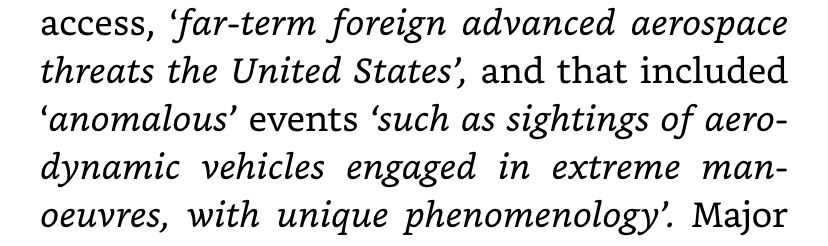
Paragraph taken from the book Unidentified Anomalous Phenomena – Adam Goldsack.
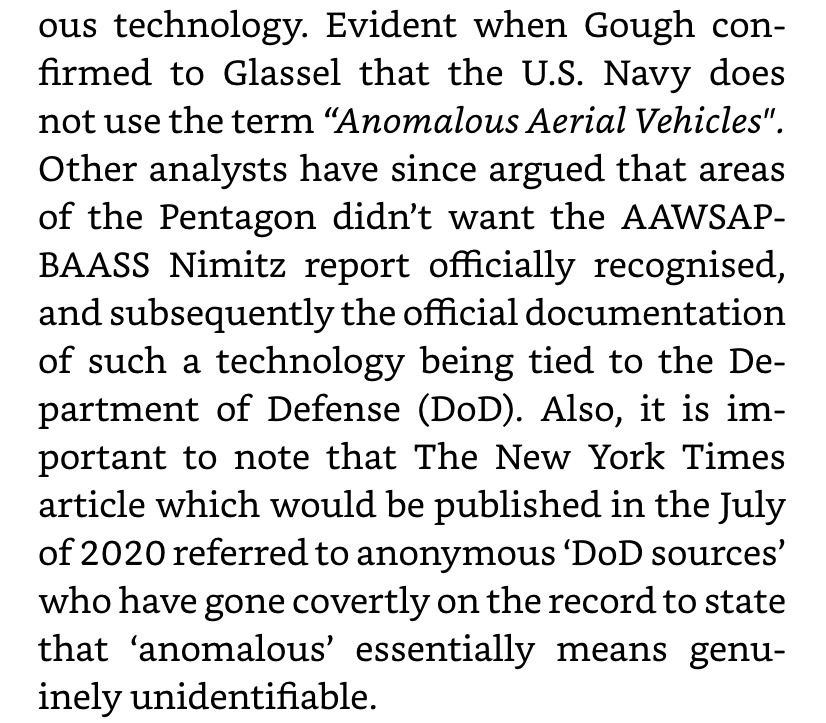
Paragraph taken from the book Unidentified Anomalous Phenomena – Adam Goldsack.
The very moment, we as activists, realised that Gough et al seemed to have a problem with the term Anomalous, we decided to use it in practice, advocating its usage for something genuinely unidentifiable. I may have been the first civilian researcher-activist to coin the term Unidentified Anomalous Phenomena, populate its meaning, and advocate its use by Congress/DoD/NASA, but I highly doubt I was able to influence those in charge in any meaningful way (I did however pass on my gratitude). Coincidently, this was undoubtedly a very happy occurrence – I just hope it has the legs to go all the way to POTUS.
Regardless, our newly established and advocated term of Unidentified Anomalous Phenomena isn’t perfect. It isn’t the genuinely unidentifiable (with more available data) concept, and certainly isn’t indicative of Non-Human Intelligence or technology.
However it is a big step in the right direction. And while the Unidentified Aerial Phenomena initiative lasted through 2017-2022, maybe we may now start to see a new era of transparency and disclosures. Maybe we can start to advocate for what UFOs and UAP really are – Anomalous.
◆◆◆
