
1,380 total views, 6 views today
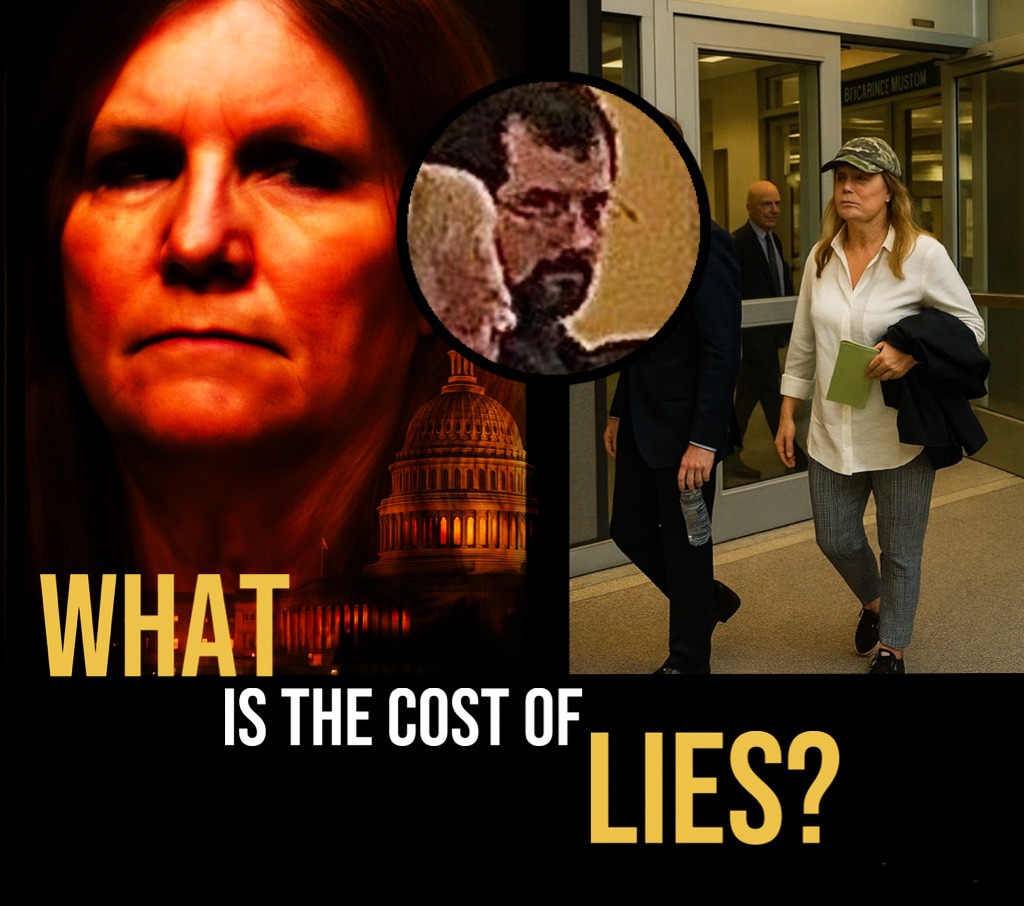
At the heart of HBO’s Chernobyl lies a brutal truth: when institutions lie to preserve power, the result is not merely ignorance, but catastrophe. Lies rot systems from the inside. They distort science, silence whistleblowers, erode public trust, and defer progress. As the world slowly awakens to the reality of Unidentified Anomalous Phenomena (UAP), we are confronted with another such system—one rooted not just in secrecy, but in decades of deliberate disinformation, obfuscation, and manipulation.
What’s emerging is not merely a question of what’s in our skies, but of who controls that knowledge—and why are they lying to the American public?
In recent years, the U.S. government has cautiously admitted that UAPs are real, with high-level officials confirming the existence of unexplained aerial objects with capabilities beyond known human technologies. But even as public interest grows, powerful forces within the defense and intelligence community are working to delegitimize whistleblowers and confuse the public. One of the most controversial figures in this campaign is Dr. Sean Kirkpatrick, former director of the Department of Defense’s All-domain Anomaly Resolution Office (AARO), whose role has increasingly come under scrutiny.
Kirkpatrick’s public posture has been carefully curated. In 2022, he claimed unfamiliarity with the UAP topic—despite documented evidence that he had attended classified briefings, including one regarding activity at Skinwalker Ranch in Utah’s Uinta Basin, long associated with anomalous military encounters (Fugal, 2023). This misrepresentation allowed Kirkpatrick to frame himself as a neutral investigator rather than a participant in long-standing UAP discussions. But neutrality requires honesty, and this initial falsehood revealed a larger pattern.
As head of AARO, Kirkpatrick co-authored a “Historical Record Report” that attempted to reduce decades of UAP sightings—many involving military pilots and nuclear facilities—to mundane misidentifications (Kirkpatrick, 2023a). The report, billed as comprehensive, was lambasted by former Deputy Assistant Secretary of Defense for Intelligence Christopher Mellon as being incomplete, misleading, and in some cases outright false (Mellon, 2024). Its purpose appeared less to inform the public than to preserve a preexisting narrative: that there is nothing to see here, and anyone suggesting otherwise is either misinformed or unstable.
Silencing Truth Through Smears
Kirkpatrick’s role has gone beyond flawed analysis. After David Grusch—a decorated Air Force veteran and intelligence official—testified under oath that the U.S. possesses non-human technology and biological materials, Kirkpatrick used his personal LinkedIn account to publicly cast doubt on Grusch’s credibility (Kirkpatrick, 2023b). At the time, Grusch was under whistleblower protection and had already been subjected to credible threats and retaliation, as confirmed by the Intelligence Community Inspector General (ICIG, 2023). Rather than defend a fellow government official acting within legal protocols, Kirkpatrick led efforts to undermine him.
These tactics were echoed by AARO deputy Tim Phillips and reinforced by a media leak of Grusch’s medical history, including PTSD-related records—an egregious violation of privacy and a tactic clearly aimed at damaging his reputation. Journalist Ken Klippenstein later admitted his involvement in acquiring and reporting those records during an appearance on Breaking Points (Klippenstein, 2023). It was a coordinated strategy: if the facts couldn’t be denied, the messenger could be discredited. And a message was sent loud and clear to anyone thinking about coming forward.
Greed, Power, and the Hidden Motivations of Secrecy
If the DoD say it’s all secret US technology – the government, the media, and even the people accept and respect this.
If the DoD acknowledges that it’s non-human technology – suddenly that information peoples public property.
So what motivates such extreme measures to suppress the truth about UAPs? The answer lies not only in fear of public panic or national security concerns, but in the pursuit of power and profit. Control over advanced non-human technology—if it exists—would confer immense strategic and economic advantages. Defense contractors, intelligence agencies, and aerospace conglomerates stand to gain (or lose) billions depending on how and when such information is disclosed. In this light, the secrecy is not just about protecting society—it’s about protecting monopolies, maintaining dominance, and preventing public oversight.
The UAP issue intersects with vast industrial interests. Military-industrial corporations often hold Special Access Programs (SAPs) that are virtually untouchable by Congress, let alone the public. If such entities are indeed reverse-engineering non-human craft, as Grusch and others allege, then the lie is not just a denial of extraterrestrial contact—it is a cover-up of the most significant technological breakthrough in human history, sequestered by those who benefit most from its concealment.
The Media as a Tool of Narrative Control
Another pillar of suppression is the mainstream press. Journalists are not always complicit, but many are manipulated—fed carefully framed statements, steered toward dismissive sources, and discouraged from digging deeper. Susan Gough, the DoD’s public affairs strategist and an expert in psychological operations (Gough, 2010), has shaped media messaging on UAPs for years. Gough notoriously spread the false narrative that Luis Elizondo, former AATIP director, had no official role in the program—an assertion later refuted by internal Pentagon emails and whistleblower filings (The Black Vault, 2021).
These efforts have created an illusion of consensus: that UAPs are explainable, unimportant, or merely misunderstood. But behind that illusion lies a growing body of credible testimony from military personnel, intelligence officials, and aerospace contractors, all telling a different story—one of recovered materials, unknown propulsion systems, and off-world origins.
The Consequences of Suppression
The consequences of this campaign go far beyond public curiosity. If non-human technologies have been recovered, then humanity has been denied the opportunity to benefit from potential breakthroughs in energy, propulsion, medicine, and materials science. These breakthroughs could address climate change, revolutionize transportation, and even redefine the boundaries of life and consciousness. Yet because access to these technologies is hoarded by private contractors and protected by layers of classification, the benefits remain locked away—known only to a select few.
The spiritual and philosophical impact is no less significant. The confirmation of non-human intelligence would force every society to reconsider its place in the cosmos. Religious traditions, historical narratives, and foundational assumptions about life and purpose would be transformed. But rather than face that reckoning, institutions have chosen silence and suppression—believing, perhaps, that humanity is not yet ready.
But truth does not wait for our readiness. It accumulates pressure. And every lie told to delay it builds a debt—one that will eventually come due.
Lies: Debt Still Unpaid
The story of UAP suppression is not simply a tale of secrecy. It is a story about how power maintains itself, nurtures its own and ensures its very survival at all costs. This is a story about how institutions preserve authority through lies, and how the truth is delayed when it threatens the wrong interests. Kirkpatrick’s actions, and those of others like him, are emblematic of this deeper pathology—a system that chooses control over curiosity, silence over science, and manipulation over meaning. But at what cost?
As with Chernobyl, the lies may seem to work—until they don’t. Eventually, the truth demands its reckoning. And in the case of UAP, the cost of those lies may be nothing less than a century of lost progress, stolen from the public and hoarded behind closed doors.
It’s time we ask not just what is flying above us—but what’s being kept from us, and why. This is not the 1950s, this is not a Soviet Era of disinformation and propaganda lies.
As Valery Legasov poignantly stated,
“Every lie we tell incurs a debt to the truth. Sooner or later, that debt is paid.”
It’s a stark reminder that the cost of deception is not just measured in lost opportunities but in the erosion of trust and the potential derailment of humanity’s progress.
References
Books and Reports:
- Hastings, R., (2008). UFOs and Nukes: Extraordinary Encounters at Nuclear Weapons Sites. Charleston, SC: BookSurge Publishing.
- AARO Historical Record Report. Washington, D.C.: U.S. Department of Defense. Available at: https://www.aaro.mil/Portals/136/PDFs/AARO%20UAP%20Historical%20Record%20Report.pdf [Accessed 7 Jun. 2025].
- Gough, S., (2003). Strategic Influence and Public Affairs in the Information Environment. Fort Belvoir, VA: Defense Technical Information Center. Available at: https://irp.fas.org/eprint/gough.pdf [Accessed 7 Jun. 2025].
Congressional and Government Documents:
- Grusch, D., (2023). Testimony before the House Oversight Committee on UAPs. Washington, D.C.: U.S. House of Representatives. Available at: https://oversight.house.gov/wp-content/uploads/2023/07/Dave_G_HOC_Speech_FINAL_For_Trans.pdf [Accessed 7 Jun. 2025].
- Shellenberger, M., (2023). Written Testimony before the House Oversight Committee. Washington, D.C.: U.S. House of Representatives. Available at: https://oversight.house.gov/wp-content/uploads/2024/11/Written-Testimony-Shellenberger.pdf [Accessed 7 Jun. 2025].
- ICIG (Intelligence Community Inspector General), 2023. Whistleblower retaliation findings on David Grusch. [Classified Report – contents referenced in testimony and oversight materials].
Online Articles and Media Interviews:
- Mellon, C., (2024). The DoD’s UAP Report: A Historic Missed Opportunity. Medium. Available at: https://medium.com/@ChristopherKMellon [Accessed 7 Jun. 2025].
- Klippenstein, K., (2023). Interview on Breaking Points. YouTube. Available at: https://www.youtube.com/c/breakingpoints [Accessed 7 Jun. 2025].
- The Black Vault, (2021). Luis Elizondo and AATIP: New Emails Confirm Role in UAP Program. Available at: https://www.theblackvault.com/documentarchive/luis-elizondo-and-aatip-new-emails-confirm-role-in-uap-program [Accessed 7 Jun. 2025].
- Shellenberger, M., (2023). How the UAP Disclosure Act Was Killed. Public Substack. Available at: https://public.substack.com [Accessed 7 Jun. 2025].
Social Media Posts and Commentary:
- Fugal, B., (2023). Twitter post documenting Kirkpatrick’s presence at a UAP briefing. [online] X (formerly Twitter). Available at: https://twitter.com/BrandonFugal/status/1689122571351861248 [Accessed 7 Jun. 2025].
- Kirkpatrick, S., (2023b). LinkedIn post criticizing David Grusch’s testimony. [online] LinkedIn. Cited in: AP News, 2023. Pentagon UFO chief slams former Air Force officer’s testimony. Available at: https://apnews.com/article/congress-ufos-uaps-pentagon-aliens-631ad4d174ee9559580935ec11afcf3f [Accessed 7 Jun. 2025].
